

the war of the worlds pdf
Overview of “The War of the Worlds”
Discover the classic H. G. Wells novel in PDF form, a free, downloadable version that preserves the original 1898 text. The file offers easy access for readers, educators, and researchers, enabling study of its themes, Victorian science, and alien invasion narrative without cost. Enjoy reading! and share.!
Author and Original Publication
H. G. Wells, born in 1866, was a pioneering English novelist whose works bridged science fiction and social commentary. His debut, The Time Machine (1895), set the stage for a career that would explore humanity’s place in a rapidly industrializing world. In 1898, Wells published The War of the Worlds in serial form through Harper’s Magazine before issuing a consolidated book edition the same year. The narrative, presented as a series of journal entries, chronicles an extraterrestrial invasion of Earth, reflecting contemporary anxieties about imperialism, technological progress, and the fragility of civilization. Wells’s meticulous research into Victorian scientific theories—particularly those concerning astronomy and biology—lent the story an air of plausibility that resonated with readers. The novel’s initial print run sold thousands of copies, establishing Wells as a household name and cementing the work’s status as a cornerstone of early science‑fiction literature. Today, the original 1898 edition remains a prized collector’s item, while modern reprints and digital PDFs keep the text accessible to new generations worldwide.
Wells’s style, with vivid descriptions and subtle social critique, earned him the title “father of modern science fiction.” The 1898 edition, printed by George Newnes in London, featured a modest cover illustration. Its first American release in 1899 was followed by French, German, and Russian translations. These early editions cemented Wells’s legacy worldwide. It remains foundational text.
Plot Summary
Set in late 19th‑century England, novel follows an unnamed narrator who chronicles the arrival of Martian cylinders from the sky. The cylinders, equipped with heat‑ray weapons, unleash a devastating invasion that quickly overcomes human defenses. As the Martians deploy tripod machines to harvest Earth’s resources, the narrator and his companions flee from London to the countryside, witnessing the collapse of society. The story details chaos of the invasion, the futile attempts of military forces, and the psychological terror experienced by ordinary citizens. Through vivid descriptions of the Martian technology and the human response, Wells explores themes of imperialism, scientific hubris, and the fragility of civilization. The climax occurs when the Martians succumb to Earth’s microbes, revealing the vulnerability of even the most advanced beings. The novel ends with the narrator reflecting on humanity’s resilience and the lessons learned from the alien threat.

The narrators diary entries capture disorientation of a society technology. He describes the Martians tripod machines as “three-legged, chariots that move with uncanny precision,” notes the heat‑ray destructive power that melts steel and vaporizes bodies. The novel portrays the collapse of social order: newsrooms, police stations, the Royal Navy are rendered impotent. In the midst of chaos, the narrator observes how ordinary people cling to hope, forming communities to survive. The climax, where the Martians are defeated by Earth’s microbes, underscores that the most advanced beings can be undone by nature’s forces. Wells concludes with a reflection on humanitysresilience, suggesting that the threat serves as a mirror for our fears and aspirations.

Historical Context of the Novel
Published in 1898, the novel reflects Victorian anxieties about empire, industrialization, and scientific progress. Wells uses the alien invasion to critique imperialism and explore humanity’s place in a rapidly changing world. It highlights the fragility of dominance now
Victorian Era Influences
H. G. Wells’s 1898 classic “The War of the Worlds” emerges from a Victorian milieu of imperial ambition and scientific curiosity. The empire’s global reach—spanning Africa, Asia, and the Americas—provides a backdrop for the novel’s depiction of an alien force that mirrors colonial conquest. Wells critiques the notion of “civilizing” missions by showing that the supposedly superior human civilization collapses under a technologically advanced invader. The era’s fascination with the mechanical and the unknown is reflected in the tripod machines, their “heat‑ray” weapons, and the relentless march of technology that outpaces human adaptation. Scientific breakthroughs of the late 19th century, such as Darwin’s theory of evolution and the burgeoning field of physics, influence Wells’s portrayal of adaptation and survival. The novel also echoes contemporary anxieties about urbanization and industrialization: the rapid growth of cities, the spread of railways, and the mechanization of labor create a sense of vulnerability that is amplified by the alien threat. Social hierarchies, from the aristocracy to the working class, are disrupted when the invaders indiscriminately target all strata, exposing the fragility of Victorian social order. Moreover, the novel’s narrative voice—first‑person, journalistic—mirrors the era’s popular periodicals, which often sensationalized scientific discoveries and imperial exploits. By weaving these elements together, Wells not only entertains but also offers a critique of the era’s blind faith in progress and empire, making the PDF version a valuable resource for scholars studying Victorian cultural and intellectual history.
Additionally, the novel’s depiction of disease and contagion reflects contemporary concerns about epidemics such as cholera and typhoid, which plagued Victorian cities. Wells uses the alien’s “black smoke” to symbolize the invisible threat of disease, paralleling the fear of unseen pathogens that could decimate populations. The psychological impact of the invasion—panic, denial, and eventual acceptance—mirrors the public’s reaction to social reforms and the shifting moral landscape of the time. The novel’s emphasis on scientific rationality, yet its ultimate failure to prevent catastrophe, underscores a tension between faith in science and the unpredictability of nature, a debate that resonated with Victorian audiences. This tension is further highlighted by the novel’s setting in rural England, where the pastoral ideal is shattered by the mechanized menace, challenging the belief that the countryside was a safe refuge from industrial calamities. Through these layers, the PDF edition preserves the intricate interplay of Victorian ideology, scientific optimism, and imperial critique that defines the work’s enduring relevance. Its publication coincided with the 1897 British imperial exhibition, embedding imperial imagery. The PDF encourages comparative studies and modern critical discourse.
Scientific and Military Inspirations
H. G. Wells drew heavily from contemporary scientific breakthroughs and military doctrines when crafting the alien invasion narrative. The late nineteenth century saw rapid advances in physics, chemistry, and engineering—particularly the development of high‑pressure steam engines, the first practical heat‑ray experiments, and the nascent field of aeronautics. Wells’s tripod machines echo the era’s fascination with mechanized warfare, reminiscent of the ironclad warships and rapid‑fire artillery that had reshaped naval strategy during the Crimean War and the American Civil War. The novel’s “heat‑ray” weapon, a speculative device that melts steel and vaporizes flesh, reflects the period’s enthusiasm for electromagnetic research, such as the work of James Clerk Maxwell and Heinrich Hertz, who demonstrated the existence of electromagnetic waves. By extrapolating these discoveries, Wells imagined a weapon that could bypass conventional defenses, a concept that foreshadowed the later development of chemical warfare in World War I.
Military strategy also informs the narrative. Wells incorporates the doctrine of total war, where civilian populations become targets, mirroring the Blitzkrieg tactics that would later dominate twentieth‑century conflicts. The alien’s use of coordinated, multi‑stage assaults—first landing, then establishing a foothold, followed by relentless bombardment—parallels the British Empire’s colonial campaigns, which relied on rapid, overwhelming force to subdue resistance. Moreover, the novel’s emphasis on intelligence gathering, reconnaissance, and the importance of scientific knowledge in anticipating enemy capabilities underscores the growing role of military research institutions, such as the Royal Navy’s Admiralty and the Army’s War Office, in shaping national defense policies.
Wells’s detailed descriptions of the alien’s physiology and technology also draw from contemporary speculation about extraterrestrial life, fueled by the publication of Charles Darwin’s “On the Origin of Species” and the burgeoning field of comparative anatomy. By integrating these scientific and military elements, Wells creates a narrative that is both thrilling and a cautionary tale about the limits of human ingenuity when confronted with forces beyond our comprehension. The PDF edition preserves this intricate blend of science and strategy, offering readers a comprehensive resource for exploring the novel’s historical underpinnings and its enduring relevance to modern discussions of technology, warfare, and global security.
Availability of PDF Versions
Public domain PDFs are free on Project Gutenberg and Internet Archive. Commercial PDFs are sold by major publishers. The file format supports easy reading on e‑readers, tablets, and PCs. Download options include direct links, email, and cloud storage Also EPUB available
Public domain PDFs are free on Project Gutenberg and Internet Archive. Commercial PDFs are sold by major publishers. The file format supports easy reading on e‑readers, tablets, and PCs. Download options include direct links, email, and cloud storage Also EPUB available
Commercial PDF Publishers
Commercial PDF editions of H. G. Wells’ classic are produced by major publishers such as Penguin Random House, HarperCollins, Simon & Schuster, and Oxford University Press. Each edition features modern typography, high‑resolution cover art, and editorial notes that deepen the reading experience. For example, Penguin’s 2023 edition includes a new introduction by a Wells scholar and a companion guide to the novel’s scientific themes, while HarperCollins’ 2022 PDF offers interactive hyperlinks to key passages. Simon & Schuster’s 2021 version adds a full‑color map of the Martian invasion sites, and Oxford’s 2020 edition provides rigorous footnotes and a concise historical summary. These PDFs are sold on the publishers’ websites and major digital retailers such as Amazon Kindle, Google Books, and Apple Books. Prices typically range from $9.99 to $14.99, reflecting added editorial content and high‑quality layout. Bulk licensing options are available for academic institutions, allowing libraries to provide unlimited access to students and faculty at discounted rates.
Some publishers also offer deluxe bundles that pair the PDF with supplementary materials such as annotated maps and a companion audio narration. These bundles, priced between $19.99 and $29.99, target collectors and educators. Budget PDFs are available from independent retailers at $5.99 or $6.99, offering core content with fewer extras. All PDFs are delivered via secure links and come with customer support for technical issues. Commercial PDFs provide a modern, scholarly edition that enhances the classic text. They are compatible with e‑readers and tablets.
For academic libraries, bulk licensing options allow unlimited access for students and faculty, often at discounted rates. These editions are compatible with e‑readers and tablets, and offline reading is supported. Customer support is available! OK

Legal and Copyright Considerations
Wells’ 1898 novel is in most countries; PDFs from Project Gutenberg are free. However, modern editions with new introductions or annotations are copyrighted. Distributing these PDFs without permission infringes copyright. Always check licensing before sharing!!
Copyright Status in Different Jurisdictions
Since its publication in 1898, H. G. Wells’s The War of the Worlds has entered the public domain in the United States, where works first published before 1926 are freely available. In the United Kingdom, the novel entered the public domain on 1 January 2024, following the 70‑year post‑mortem‑deprivation rule applied to authors who died in 1945. European Union member states largely mirror the UK’s 70‑year rule, so the text is now free across the continent. Australia’s copyright law also grants public domain status to works published before 1955, making the novel freely accessible there. Canada, however, applies a 50‑year post‑mortem‑deprivation period, so the book entered the public domain in 1996. In India, the 60‑year rule applies, so the text became public domain in 1958. China’s copyright regime is more complex; the novel is considered public domain for the original text, but modern translations and annotated editions remain protected. South Africa’s 50‑year rule also places the original text in the public domain, though any derivative works are still copyrighted, depending on the jurisdiction. Readers should cite the source and link to the public domain text when sharing online, respecting digital rights, and ensure that any added commentary or illustrations are also properly credited to avoid infringement. Readers should cite the source and link to the public domain text when sharing online, respecting digital rights!
Licensing for PDF Distribution
Because the text is in the public domain, any PDF containing the original 1898 edition can be distributed freely under no copyright restrictions. However, if the PDF includes modern translations, annotations, or editorial content, those additions may be subject to copyright and require appropriate licensing. For example, a PDF that includes a 2005 translation by a living translator would need permission from the translator or publisher. Many free PDF versions on Project Gutenberg and Internet Archive are licensed under CC‑0, placing the work in the public domain for all users. If a distributor wishes to add new illustrations or a foreword, they must secure separate rights for those elements. Commercial publishers often release PDFs under a standard copyright notice, allowing only non‑commercial use unless a license fee is paid. Users should always verify the license attached to the PDF they download, ensuring compliance with terms of use, especially when redistributing or printing. When in doubt, consult the original publisher’s copyright policy or seek legal advice. This approach guarantees that the PDF remains legally shareable while respecting any derivative works that may still be protected. The PDF distribution strategy should align with the chosen license, whether it is CC‑0, a Creative Commons Attribution‑ShareAlike, or a proprietary license that restricts copying and modification. By following these guidelines, individuals and organizations can share the War of the Worlds in PDF format without infringing on existing rights for all readers.
Popular Sources for Downloading the PDF
Project Gutenberg, Internet Archive, and Google Books host free, public‑domain PDFs of H. G. Wells’ classic. These sites offer high‑quality scans and plain‑text versions, ensuring easy reading on any device. Always verify the license before sharing or printing. Download options include PDF, EPUB, and text!
Project Gutenberg and Internet Archive

Project Gutenberg offers a free, downloadable PDF of H. G. Wells’ “The War of the Worlds,” available in multiple formats such as ePub, Kindle, and plain text. The site’s catalog lists the novel under the public‑domain section, allowing anyone to download, print, or distribute the PDF without licensing fees. Users can also access a scanned version that preserves the original 1898 typography, complete with chapter headings and marginal notes, which is ideal for academic citation or historical study.
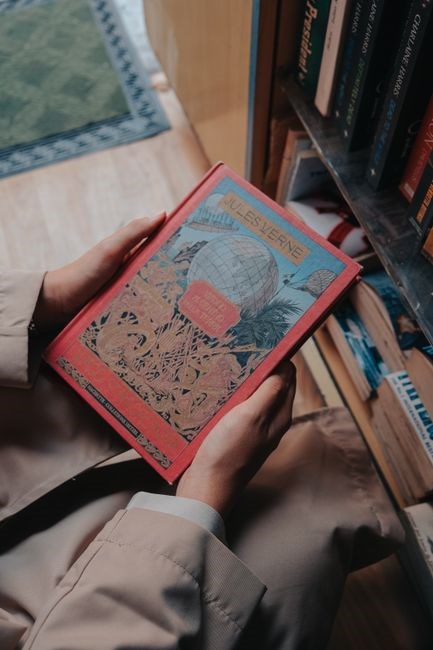
The Internet Archive hosts a high‑resolution PDF copy that includes the original cover art and editorial notes. Its “Wayback Machine” feature allows readers to view earlier versions of the text, providing insight into how the novel has been preserved over time. Both platforms are maintained by non‑profit organizations committed to digital preservation. They ensure that the PDF files remain accessible for future generations, and they offer multiple download options to accommodate different reading devices. Whether you prefer a lightweight text file or a richly formatted PDF, these repositories provide reliable, legal access to one of the most influential science‑fiction works ever written.
The Archive’s metadata includes detailed citation information, making it easy for scholars to reference the PDF in academic works. The platform offers an API for automated downloads, which researchers can use to build datasets. This level of accessibility supports both casual readers and professional scholars alike